
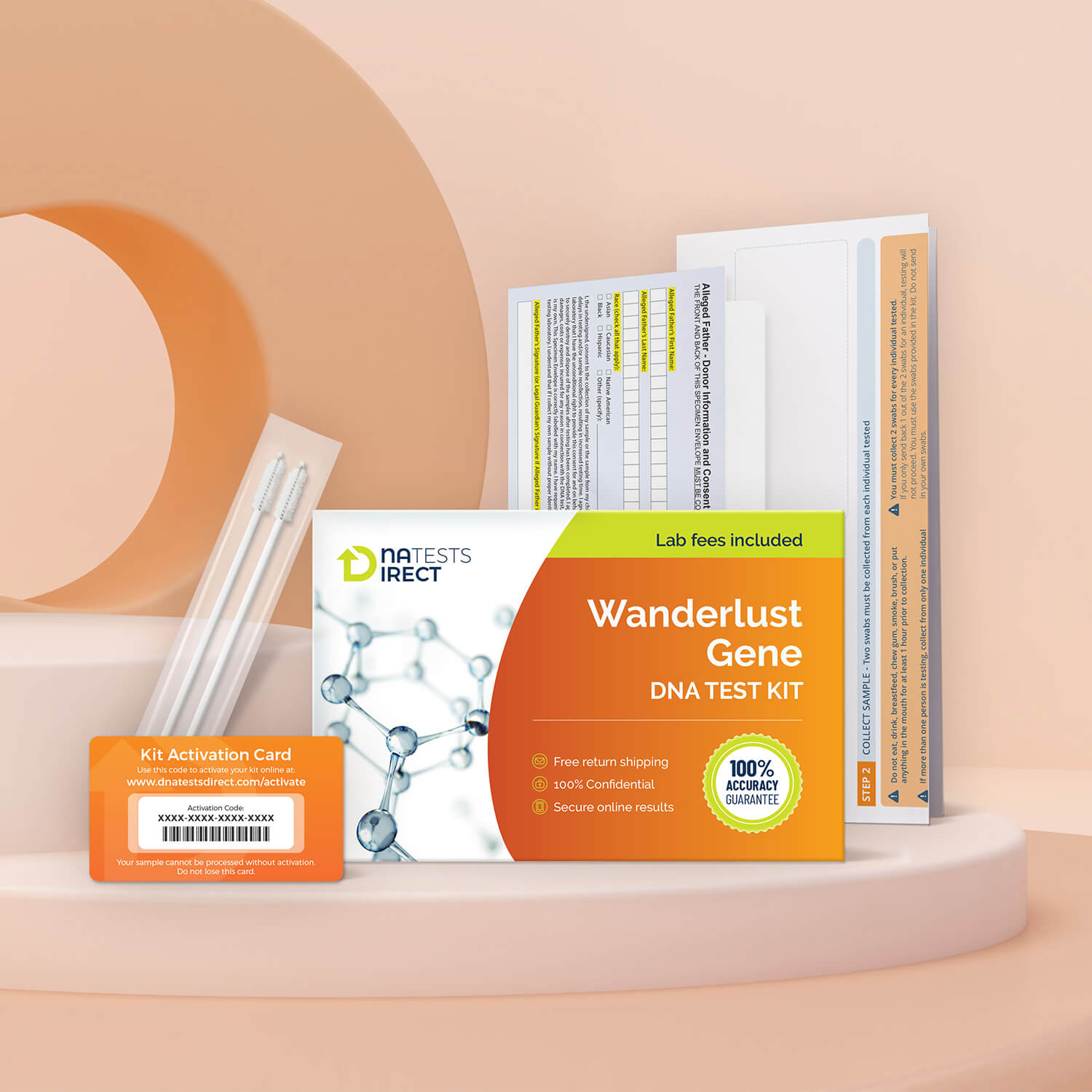




Wanderlust Gene Test
$149
Unlock Your Inner Explorer: DRD4 Gene
Ever wondered why the thrill of a new destination or the unknown calls to you? Our Wanderlust Gene DNA Test can help uncover the science behind your adventurous spirit.
- The Science of Adventure: Learn how your unique genetic makeup might contribute to your desire to travel and try new things.
- DRD4 7R+: Discover if you have the "wanderlust gene" variant linked to curiosity, exploration, and a thirst for adventure.
- A Thirst for Novelty: This at-home DNA test examines the DRD4 gene to determine if you have a variant associated with a love of travel.
- For the Curious: A fun way to understand the potential genetic link to your adventurous spirit.
How it Works

Order your DNA Kit
Place your order online, and we’ll send you a DNA test kit with everything you need to collect your samples.

Collect DNA Samples
Follow the detailed, step-by-step instructions to collect DNA samples using the provided mouth swabs.

Lab Analysis
Use the provided return envelope to mail your DNA samples to our laboratory for analysis.

Receive Results
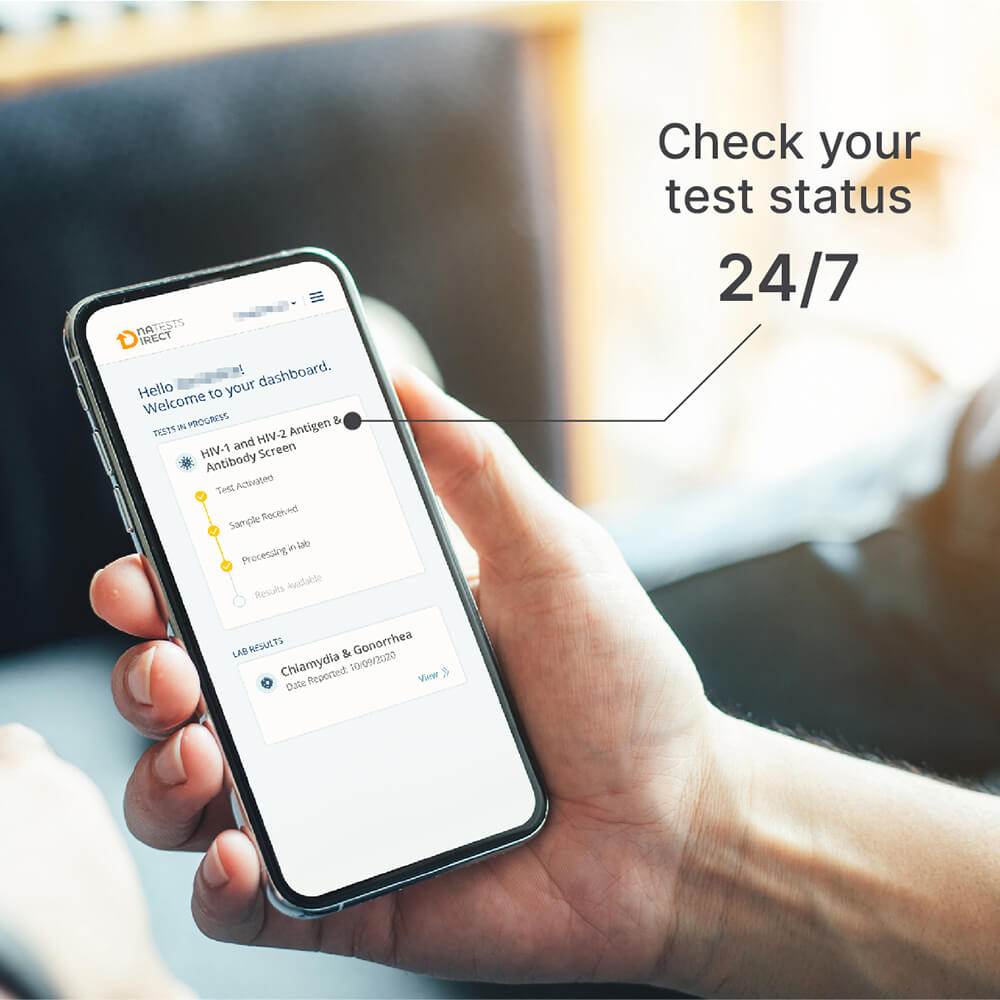
Download your results from your secure online account as soon as they’re ready.
Wanderlust: Where Adventure Meets Genetics
Have you ever felt an irresistible urge to see the world, meet new people, and break from routine? This deep-seated desire, known as wanderlust, might actually be encoded in your DNA, specifically through a variation of the DRD4 gene that influences how sensitive we are to dopamine.
Dopamine: The Brain’s Reward System
Dopamine is often called the “feel-good” chemical because it’s a big part of how we experience pleasure and satisfaction. This powerful neurotransmitter sends signals throughout the brain, affecting our mood, motivation, and more. When we do something enjoyable, like eat our favorite food or receive a compliment, our brain releases dopamine. This feeling rewards us and encourages us to seek out similar experiences.
For some people, new and exciting experiences trigger an especially strong release of dopamine. These are often the people who crave travel, constantly seek out new adventures, and find constant stimulation incredibly rewarding!
The Genetics of Wanderlust
Our genes are the blueprints for who we are, influencing everything from our height to how our brains work. Variations in the DRD4 gene, which provides instructions for building a specific dopamine receptor, can change how sensitive we are to this “feel-good” chemical.
What is DRD4?
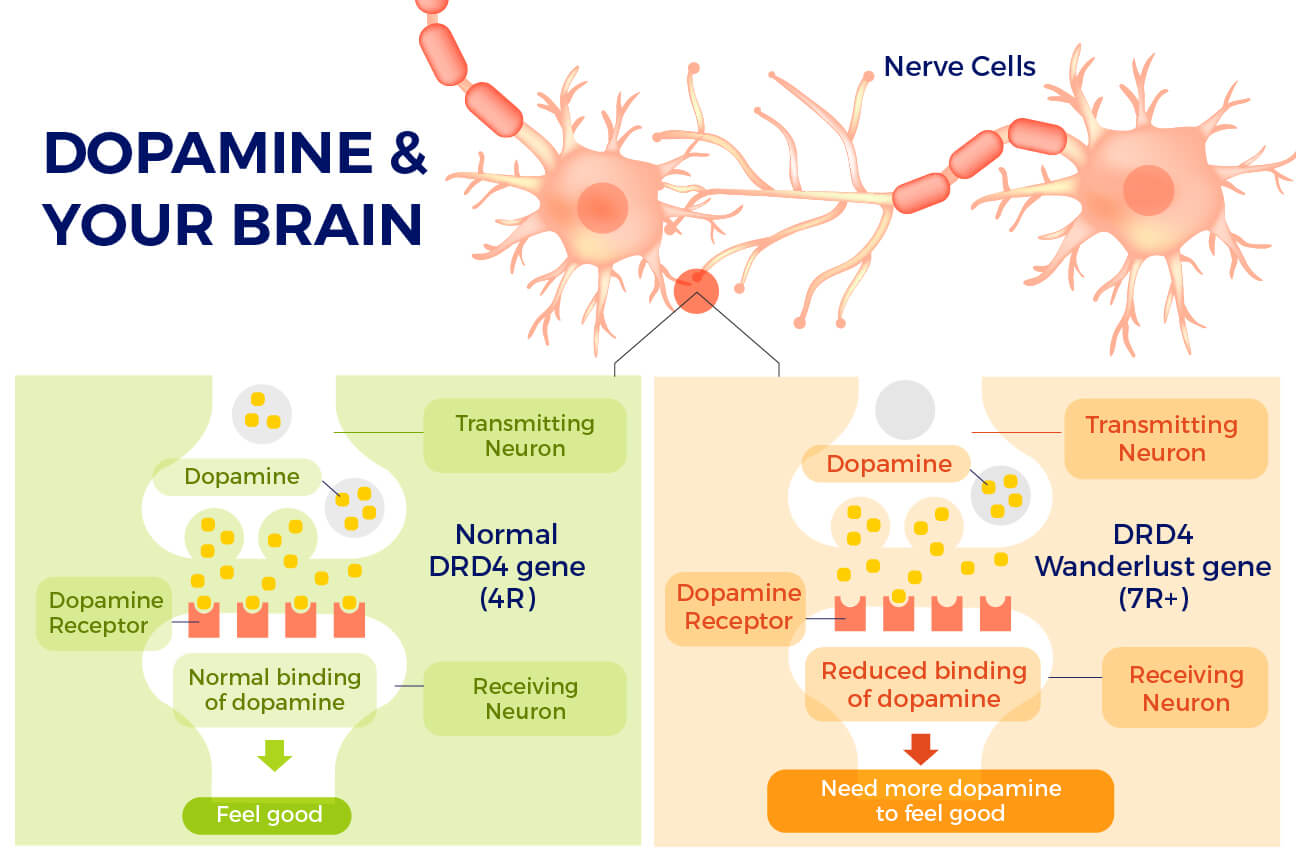
The DRD4 gene carries the code for building the dopamine receptor D4, a key signal tower in your brain designed to pick up dopamine’s messages. When dopamine is released—whether from enjoying a meal, achieving a goal, or experiencing something new—this receptor picks up the signals and translates them into feelings of satisfaction.
The Wanderlust Variant: 7R+
The DRD4 gene comes in several variations. We inherit two copies of the DRD4 gene, one from each parent. One particular variation, called 7R+, has been nicknamed the “wanderlust gene.”
People who inherit at least one copy of the 7R+ variant tend to have dopamine receptors that binds with dopamine less efficiently than the common 4-repeat (4R) version. This means they might crave a bit more excitement and stimulation – like the thrill of travel or exploring new cultures – to achieve that same satisfying dopamine rush.

Your Wanderlust Test Results
Our Wanderlust Gene DNA Test checks if you have the 7R+ variant of the DRD4 gene. Having this variant could explain why you crave exploration and find unique excitement in travel. It’s often linked to these personality traits:
- Restlessness: Feeling a pull to explore, discover, and break free from routine.
- Novelty-seeking: Craving new experiences, foods, cultures, and unfamiliar environments.
- Adaptability: Embracing change and thriving in settings outside your comfort zone.
- Openness: Welcoming new perspectives and embracing the world with unbridled curiosity.
- Risk-taking: Finding exhilaration in a touch of calculated risk or the excitement of the unknown
It’s important to remember that genes are just one part of the story. Your environment, life choices, and personal preferences also significantly shape your tendencies towards wanderlust.Discover your wanderlust tendencies and uncover the secrets of your adventurous spirit!

Frequently Asked Questions
What is the Wanderlust Gene Test?
The Wanderlust Gene Test is a simple at-home DNA test that can tell you if you have a genetic variant associated with a love of travel, adventure, and new experiences. It examines the DRD4 gene to see if you carry the specific variant known as 7R+, which has been linked to personality traits like novelty-seeking and restlessness.
Who is this test for?
This test is for the curious, the adventurous, and anyone who has ever felt a deep-seated urge to explore. If you’re passionate about travel or constantly seeking new challenges and experiences, this test can offer a genetic glimpse into what might be fueling your drive.
What does it mean if I have the "wanderlust gene"?
Having the 7R+ variant means you have a genetic predisposition for traits like curiosity, impulsivity, and a desire for adventure. It might help explain why you love to travel, are open to taking risks, or get bored with routine more easily. It’s a fun way to connect your personality to your unique genetic code.
Does having this gene variant mean I'm destined to travel?
Not necessarily. Having the DRD4-7R variant indicates a genetic predisposition, not a destiny. Your personality and life choices are a complex mix of genetics, environment, and personal experiences. This test provides one piece of your unique personal puzzle.
How can I use the information from this test?
The results are for personal insight and entertainment. Understanding that you may have a genetic inclination towards adventure can be a fun way to embrace your personality and may even inspire you to plan your next trip or take on a new and exciting challenge.
What gene does this test look at?
The test specifically analyzes the DRD4 gene, looking for the 7R+ variant. This gene is related to dopamine, a neurotransmitter in the brain associated with pleasure, motivation, and reward, which helps explain its link to novelty-seeking behavior.
Is your testing facility reputable and accredited?
How will I receive my results?
How long does it take to get results?
Once your sample is received by our laboratory, processing usually takes 6-8 weeks. You will receive an email notification when your results are ready, and you can access your detailed report through a secure online portal.
Is the testing process confidential?
Yes, your confidentiality is guaranteed. From the discreet packaging of the test kit to the secure delivery of your results, we ensure your privacy is protected every step of the way.