





Promiscuity Gene Test
$149
Discover Your Genetic Blueprint for Relationship Behaviour
Ever wondered why some people seem naturally drawn to variety in their romantic lives while others prefer long-term commitment? The answer may lie in your DNA. Our Promiscuity Gene Test analyzes your DRD4 gene variants to reveal how your unique genetic makeup influences your dopamine sensitivity and relationship tendencies.
- The Science of Desire: Discover if you have the DRD4 gene variant linked to reward-seeking behaviors and promiscuity.
- It's All About Dopamine: Understand the connection between DRD4 and how your body's reward system processes dopamine.
- Easy At-Home Testing: Collect your DNA with a simple, painless mouth swab and receive confidential results online.
How it Works

Order your DNA Kit
Place your order online, and we’ll send you a DNA test kit with everything you need to collect your samples.

Collect DNA Samples
Follow the detailed, step-by-step instructions to collect DNA samples using the provided mouth swabs.

Lab Analysis
Use the provided return envelope to mail your DNA samples to our laboratory for analysis.

Receive Results
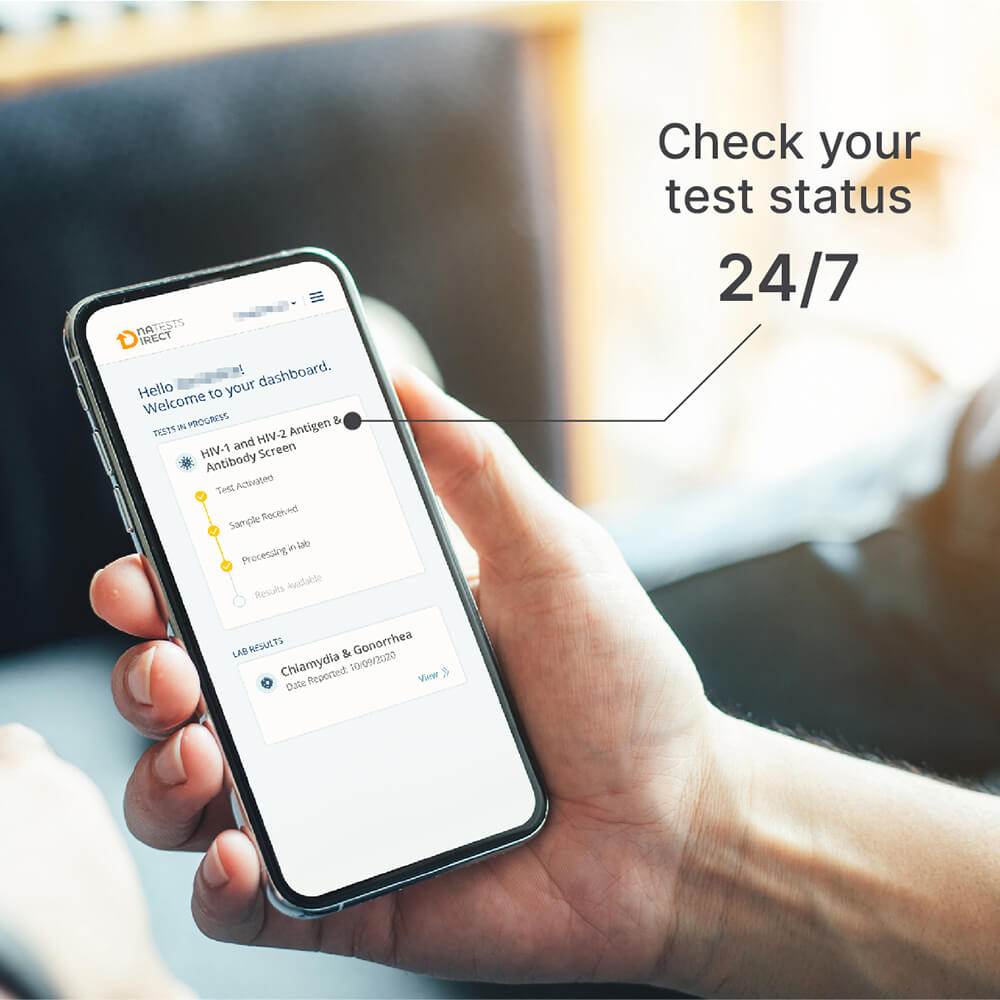
Download your results from your secure online account as soon as they’re ready.
What is the "Promiscuity Gene"?
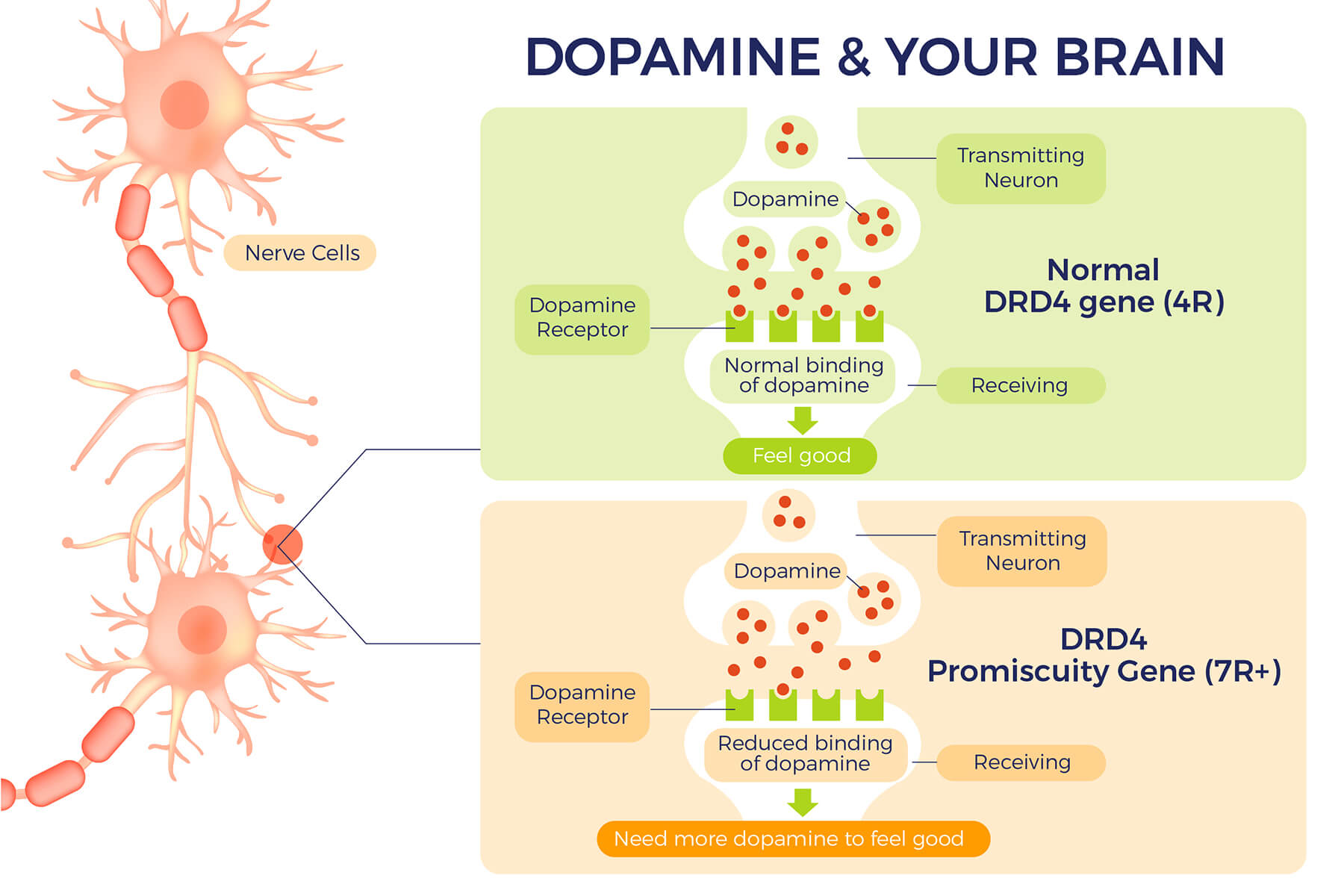
The promiscuity gene refers to specific genetic variants of the DRD4 gene, which provides instructions for creating the dopamine receptor D4 in your brain. This gene contains a variable number of repeats that directly influence how your dopamine receptors function, ranging from 2 to 11 repeats in different individuals.
The most significant variant is the seven-repeat version (7R), which has reduced binding efficiency for dopamine compared to shorter versions. Research shows that individuals carrying variants with 7 or more repeats (+7R) demonstrate measurably different behavioural patterns, including reporting more than 50% more extra-pair partners compared to those with shorter repeat sequences.
Understanding your DRD4 gene variant provides valuable insights into your neurochemical makeup and can help explain individual differences in relationship behaviours and reward-seeking tendencies.
How is the DRD4 Gene Variant Inherited?
You inherit two copies of the DRD4 gene—one from your mother and one from your father. Located on chromosome 11, this gene comes in several different versions (alleles), defined by the number of repeats (from 2R to 11R).
This test will determine which versions of the DRD4 gene you carry. If you inherit one or two copies of the gene with seven or more repeats (+7R), you have a genetic predisposition associated with novelty-seeking and an increased likelihood of promiscuity. It is important to remember that genetics is just one factor; environment and personal choice also play a significant part in shaping behaviour.

Understanding Your Results

Frequently Asked Questions
What is the Promiscuity Gene Test?
The Promiscuity Gene Test is an at-home DNA test that determines if you carry a specific genetic variant that has been linked to a tendency toward promiscuous behavior. It offers a scientific glimpse into whether your genes might play a role in your attitudes toward sexual relationships and novelty-seeking.
Who should consider taking this test?
This test is for individuals who are curious about the potential genetic influences on their personality and behavior, specifically regarding promiscuity and novelty-seeking. It is intended for personal insight and discovery.
What does it mean if I have the "promiscuity gene"?
Having the 7R+ variant suggests you may have a genetic predisposition to be more of a risk-taker and novelty-seeker, which can extend to sexual behavior. Studies have shown that individuals with this gene variant are more likely to report having a higher number of sexual partners. It is a predisposition, not a certainty.
If I have this gene variant, does it mean I will be promiscuous?
No, this is not a deterministic test. Having a particular genetic variant only indicates a predisposition or likelihood for certain traits. Your behavior is a complex result of many factors, including your environment, personal choices, and other genetic influences.
What can I do with the results of this test?
The results are for informational and entertainment purposes. They can offer a unique, science-based insight into your personality profile and can be a fun way to understand the different factors that make you who you are.
What gene is being analyzed in this test?
This test analyzes the DRD4 gene, the same gene linked to wanderlust. Certain variants have been associated with reward-seeking behaviors, which can include both thrill-seeking and a higher likelihood of promiscuity.
Is your testing facility reputable and accredited?
How will I receive my results?
How long does it take to get results?
Once your sample is received by our laboratory, processing usually takes 6-8 weeks. You will receive an email notification when your results are ready, and you can access your detailed report through a secure online portal.
Is the testing process confidential?
Yes, your confidentiality is guaranteed. From the discreet packaging of the test kit to the secure delivery of your results, we ensure your privacy is protected every step of the way.