







DNA Cardiovascular Disease Test
$195
Cardiovascular Disease: Decoding Your Genetic Risk
Discover your genetic risk for cardiovascular disease with our DNA ApoE Cardiovascular Disease Risk Test. This test analyzes your APOE gene to provide insights into your potential risk for developing heart disease.
- Understand Your Cholesterol Genetics: Learn how your APOE gene influences your body's ability to regulate cholesterol.
- Cholesterol Insights: Learn how your genes affect LDL/HDL cholesterol levels and heart attack risk.
- Guide Your Health Plan: Find out if diet or statins might be more effective for you based on your DNA.
How it Works

Order your DNA Kit
Place your order online, and we’ll send you a DNA test kit with everything you need to collect your samples.

Collect DNA Samples
Follow the detailed, step-by-step instructions to collect DNA samples using the provided mouth swabs.

Lab Analysis
Use the provided return envelope to mail your DNA samples to our laboratory for analysis.

Receive Results
Download your results from your secure online account as soon as they’re ready.
What is Cardiovascular Disease?
Cardiovascular disease is a broad term for conditions affecting the heart and blood vessels. This includes coronary artery disease (narrowing of the arteries), heart attack, stroke, and high blood pressure. These conditions often develop due to atherosclerosis, a buildup of plaque (cholesterol, fat, and other substances) in the arteries.
A leading cause of death worldwide, its development is influenced by a complex interplay of genetic and environmental factors. One key player in this intricate process is the apolipoprotein E (APOE) gene.
APOE plays a crucial role in lipid metabolism, regulating the transportation and distribution of cholesterol and other lipids in the body. Cholesterol buildup in the arteries can lead to atherosclerosis, a condition that increases the risk of heart attacks and strokes.
APOE and Cardiovascular Disease
The APOE gene provides instructions for a protein that helps manage cholesterol levels in your body. Different versions of this gene (called alleles – e2, e3, and e4) can affect how efficiently your body handles cholesterol.
- e2: This allele is associated with lower LDL cholesterol and generally a lower risk of CVD. However, having two copies (e2/e2) slightly increases the risk of a rare condition called hyperlipoproteinemia type III, which can also contribute to CVD.
- e3: This is the most common allele and is considered neutral, meaning it doesn’t significantly impact your CVD risk.
- e4: This allele is linked to higher LDL cholesterol and a greater risk of developing CVD, especially if you have two copies (e4/e4).

Understanding Your Results
Your DNA Cardiovascular Disease Risk (ApoE) Test looks for specific variants in the APOE gene that are linked to cardiovascular disease. Knowing these variants can help you understand your risk and take preventive measures.
Here’s a breakdown of the variants that the test looks for:
| Gene | Variants | Description |
|---|---|---|
| APOE | e3/e3 | Homozygous e3/e3: This genotype does not increase the risk of cardiovascular disease. It is considered neutral, and individuals are likely to respond well to statins if required to lower blood cholesterol. |
| APOE | e2/e3 | Heterozygous e2/e3: This genotype does not increase the risk of cardiovascular disease. It is considered neutral, and individuals are likely to respond well to statins if required to lower blood cholesterol. |
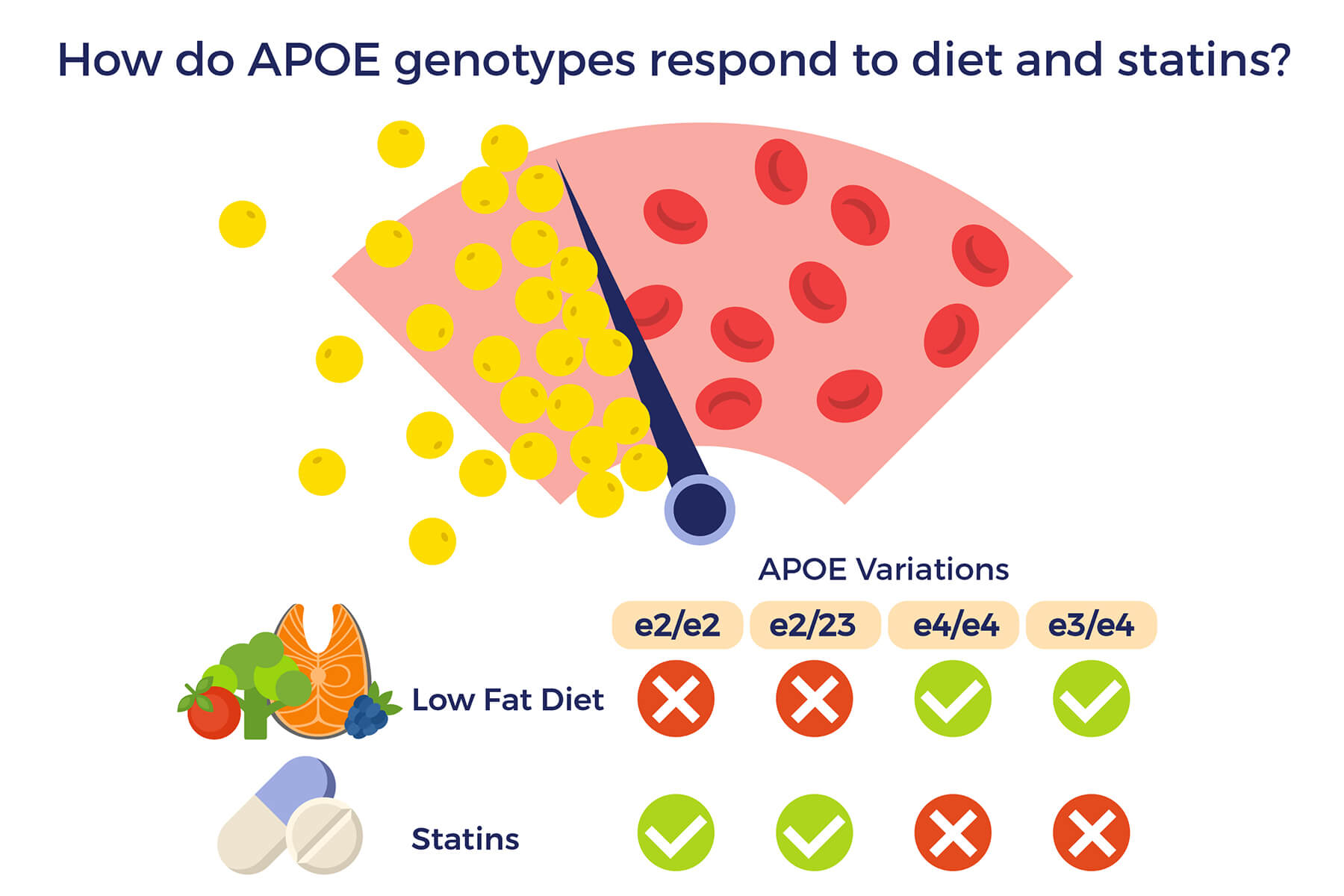
| APOE | e2/e2 | Homozygous e2/e2: This genotype is associated with a slightly increased risk for hyperlipoproteinemia type III, which can lead to early-onset cardiovascular disease. A diet low in sugar and carbohydrates is recommended, while response to a low-fat diet may be less favorable. |
| APOE | e3/e4 | Heterozygous e3/e4: This genotype is associated with an increased risk of elevated LDL-cholesterol and atherosclerosis, leading to a higher risk of cardiovascular disease. Individuals may not respond well to statins but will likely benefit from a low-fat diet. |
| APOE | e2/e4 | Heterozygous e2/e4: This genotype does not appear to contribute to an increased lifetime risk of developing cardiovascular disease. The e2 allele is thought to neutralize the increased risk associated with the e4 allele. |
| APOE | e4/e4 | Homozygous e4/e4: This genotype is associated with a significantly increased risk of elevated LDL-cholesterol and atherosclerosis, leading to a higher risk of cardiovascular disease. Individuals are not likely to respond well to statins but will likely benefit from a low-fat diet. |
It’s important to note that the APOE genotype is just one factor influencing CVD risk. Other genetic and lifestyle factors, such as diet, exercise, and smoking, also play a significant role. Discussing your results with a healthcare provider can help you understand your overall CVD risk and develop a personalized prevention plan.

Frequently Asked Questions
What is the purpose of the Cardiovascular Disease (APOE) DNA Test?
The Cardiovascular Disease (APOE) DNA Test is an at-home test that analyzes your DNA to determine which variants of the APOE gene you carry. The purpose of the test is to help you understand your genetic risk for developing cardiovascular disease and high cholesterol, and to discover the most effective approach for you to lower your cholesterol levels.
How does the APOE gene affect heart health?
The APOE gene plays a key role in how your body handles cholesterol. High levels of “bad” cholesterol, or LDL-cholesterol, can lead to atherosclerosis, a fatty buildup in the blood vessels that is a primary cause of cardiovascular disease. This test reveals your specific APOE genetic makeup, which influences your risk of having elevated LDL-cholesterol.
Who should consider taking this test?
This test is ideal for anyone who wants to be proactive about their heart health, especially those with a family history of heart disease or high cholesterol. Understanding your genetic risk can empower you to make more informed decisions about diet, lifestyle, and medical treatments with your healthcare provider.
What specific information will my results provide?
Your results will identify which combination of the three APOE alleles (e2, e3, e4) you have inherited. 6This specific pairing, such as e3/e4 or e2/e2, is directly linked to your genetic risk for high LDL-cholesterol and certain health conditions, and can even suggest how you might respond to different treatments. 7
Can this test help guide my treatment for high cholesterol?
Yes, this is a key benefit of the test. Your specific APOE gene combination can indicate which treatment options may be most effective for you. For example, individuals with the e3/e4 or e4/e4 variants may find that a low-fat diet is particularly beneficial, as statins are not typically as effective for them. This is valuable information to discuss with your doctor.
Is this test a diagnosis for cardiovascular disease?
No, this test is not a diagnosis. It is a powerful screening tool that identifies your genetic predisposition to a disease. Cardiovascular disease is a complex condition influenced by both genetics and lifestyle factors like diet and exercise. You should always consult with a healthcare professional for any health concerns or a formal diagnosis.
Is your testing facility reputable and accredited?
How will I receive my results?
How long does it take to get results?
Once your sample is received by our laboratory, processing usually takes 6-8 weeks. You will receive an email notification when your results are ready, and you can access your detailed report through a secure online portal.
Is the testing process confidential?
Yes, your confidentiality is guaranteed. From the discreet packaging of the test kit to the secure delivery of your results, we ensure your privacy is protected every step of the way.